
Most “headshot booth” case studies online are vendor brochures. Stock photos. Vague claims. “Hundreds of happy attendees.”
That’s not useful if you’re a sponsor trying to decide whether a headshot station is worth the spend at your next conference.
So here’s a real one. Real client. Real numbers. Hour by hour.
The Setup
The Texas Autopsy Services is a vendor in the death industry, providing certified autopsies throughout Texas. This conference was in Denton, Texas. The attendees are a specific crowd — county officials, justices of the peace, medical examiners, investigators. Not the typical SaaS-conference badge-scan crowd. Smart, busy, slightly skeptical of anything that feels like marketing.
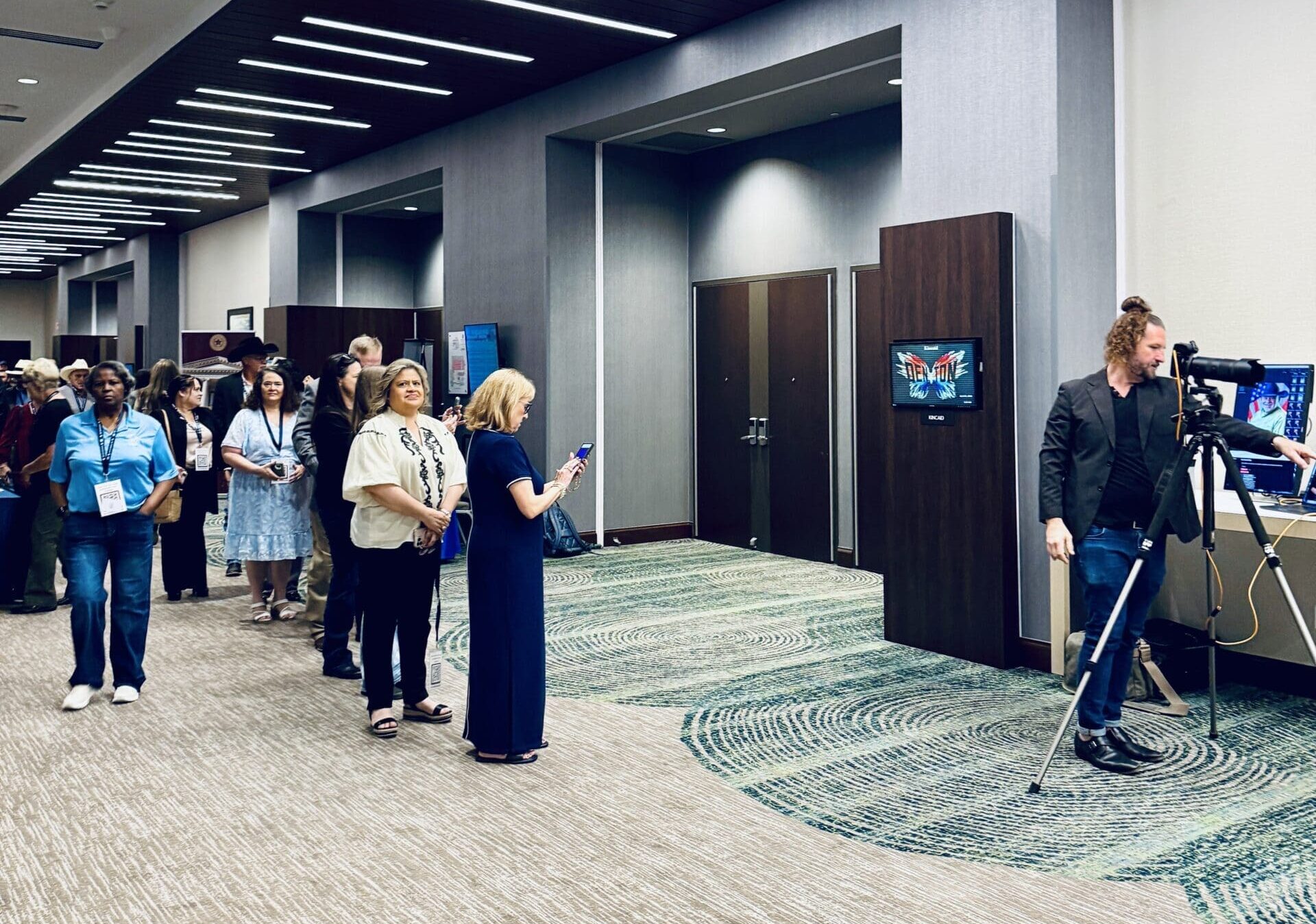
TAS hired me to run a branded conference headshot station for the duration of the event. The brief was simple: give attendees a polished professional headshot they could use on their county website or LinkedIn, capture their contact info as part of the signup, and hand TAS the full attendee dataset at the end of the day.
One photographer. One station. Six hours. Custom branding everywhere.
The Numbers
Before I get into what we did and what we learned, here are the metrics that matter:
- Attendees through the station: 68
- Gallery emails delivered: 67 (one attendee gave a typo’d address — caught it day-of)
- Galleries opened within 24 hours: 62 (91%)
- Galleries opened within 1 hour of receiving: 8 (12%)
- Total photos delivered: 538 (after dedup)
- Custom field completion rate (phone, county, precinct): 100% on required fields, 98% on optional
For context: a 91% open rate on a delivery email crushes the industry average for any marketing email category by 5-10x. Conference attendees open these because they want their photo, not because they’re being marketed to. That’s the whole differentiator.
Hour by Hour
Here’s how the day actually went.
Hour 1 (8:30–9:30 AM): Slow start. The first attendees showed up before they’d had coffee, hesitant about the station. I ran 6 sessions in the first hour. Average session length: 4 minutes (this includes signup, three poses, color check on the back of the camera, and a thank-you).
Hour 2 (9:30–10:30 AM): Coffee break. Foot traffic exploded. 14 sessions. Word was traveling — attendees who’d done their session were telling friends “you have to try the photo booth, you get the photo before you sit down for the keynote.”
Hour 3 (10:30–11:30 AM): Steady. 11 sessions. The keynote was running so traffic dipped briefly mid-hour, then surged.
Hour 4 (11:30 AM–12:30 PM): Lunch wave. 13 sessions. People ate at the booths so the line was constant.
Hour 5 (12:30–1:30 PM): Post-lunch lull. 9 sessions. Used this time to coach the camera-shy attendees who’d been hovering all morning. (More on this below — it’s important.)
Hour 6 (1:30–2:30 PM): Closing rush. 15 sessions. Several attendees who hadn’t planned on doing it changed their minds when they saw their colleagues’ photos in the gallery.
Total: 68 sessions in 6 hours. Average throughput: 11.3 attendees per hour. The “headshot in 60 seconds” line is real — the photography is fast, but the relational time (greeting, posing, coaching, color check) is what makes the experience feel premium and what produces images people actually use.
What Worked
The branded signup form did the heavy lifting. Every attendee scanned a QR code at the station, filled out a TAS-branded form on their phone, and was immediately added to the queue. Their name appeared on my dashboard before they sat down. The form asked for the fields TAS specifically wanted — phone, county, precinct, and a 2026 fee schedule interest opt-in.
That last field matters. TAS wasn’t just collecting names. They were segmenting their list for follow-up. The headshot station became a free-to-attendee, premium-feeling lead capture that fed directly into TAS’s outreach plan.
Instant delivery changed the dynamic. Attendees received their photo by email before the next break. They opened it on their phone, screenshotted it, sent it to their spouse, posted it on LinkedIn — sometimes before the next session even started. Each shared photo was a free TAS impression to that attendee’s network.
Custom branding built trust. Every email, every gallery page, every retouch checkout screen was branded TAS. Not “powered by Erick Johnson Photography.” Not generic vendor templates. Attendees experienced this as a TAS amenity, which is exactly the perception the sponsor is paying for.
The Takeaway
If you’re considering a headshot station for your next conference, ask the vendor for real numbers. Not “hundreds of attendees served.” Actual conversion rates. Open rates on delivery emails. Custom field completion. What changed between hour 1 and hour 6.
If they can’t tell you, they probably aren’t measuring it — and you’ll be the one explaining the spend to your finance team after the event.
Want to see what this would look like at your event? Check my date, see how the headshot station works step by step, or review the pricing structure for sponsor activations.

Be The First To Comment