
If you’re sponsoring a conference booth this year, you’ve got somewhere between $5,000 and $25,000 to put behind an activation. The question isn’t whether to do something. It’s what.
Branded swag. A hospitality lounge. A photo wall with your logo. A headshot station. Those are the four options that show up in nine out of ten sponsor decks.
Most of them won’t generate the leads you need to justify the spend.
Here’s an honest comparison of all four, based on what I see at events across DFW every month — what each one actually delivers, what it actually costs, and which one the math favors for B2B sponsors trying to drive pipeline.
Branded Swag
Cost: $3,000–$15,000 depending on item and quantity
Lead capture: Almost zero
Engagement window: 5 seconds at the booth, then maybe a week if the item survives
The pen, the stress ball, the canvas tote — these have one job: keep your logo in front of the attendee for as long as possible after the event. They do that job poorly. Industry studies consistently show that the majority of conference swag is discarded within 30 days. Of what survives, most ends up in a desk drawer where the logo never sees daylight again.
Worse: swag almost never captures contact info. The attendee grabs it from a bowl on the corner of your table and walks away. You get an empty bowl. They get a stress ball. Nobody got a lead.
Where swag still works: as a thank-you for attendees who already gave you their info via another mechanism. Not as a primary activation.
Hospitality Lounge
Cost: $10,000–$40,000 depending on event and venue
Lead capture: 30–60 leads typical
Engagement window: 15–45 minutes per attendee, but shallow conversation
The branded coffee bar, the comfortable seating, the phone-charging station — these get bodies into your space. Attendees recognize the brand and associate it with a moment of relief during a long conference day.
The problem is filtering. A hospitality lounge attracts everyone, including speakers, vendors, students, and competitors. Your sales team spends hours collecting business cards, then spends another two weeks separating real prospects from people who just wanted free WiFi.
The conversion math is rough: a $25,000 lounge that produces 40 verified leads costs $625 per lead, before you factor in the AV, furniture rental, and barista. Real leads are usually closer to half of that count once you scrub the list.
Where lounges still work: high-end events where the brand-association moment matters more than the lead count. Think enterprise sponsorships at private invite-only events, not crowded trade shows.
Photo Wall / Step-and-Repeat
Cost: $2,000–$8,000 (cheap end of activations)
Lead capture: Variable; usually under 25 verified leads
Engagement window: 30 seconds, plus social-media tail if attendees post
The branded backdrop where attendees take selfies. Cheap to produce, photogenic, easy to install. Sponsors love it because it shows up in attendee Instagram stories and LinkedIn posts for the duration of the event.
The catch: it almost never captures contact info. Attendees pose, snap a photo on their phone, and walk away. The post-event lift comes from social-media impressions you can’t tie back to a specific lead.
If your goal is brand awareness at a low budget, a photo wall is a reasonable choice. If your goal is pipeline, you’ll be back in this same conversation next year.
Conference Headshot Station
Cost: $5,000–$12,000 depending on event size and branding scope
Lead capture: 60–250 verified leads typical, with full contact info
Engagement window: 3–5 minutes per attendee at the booth, plus indefinite afterward (the photo lives on their LinkedIn)
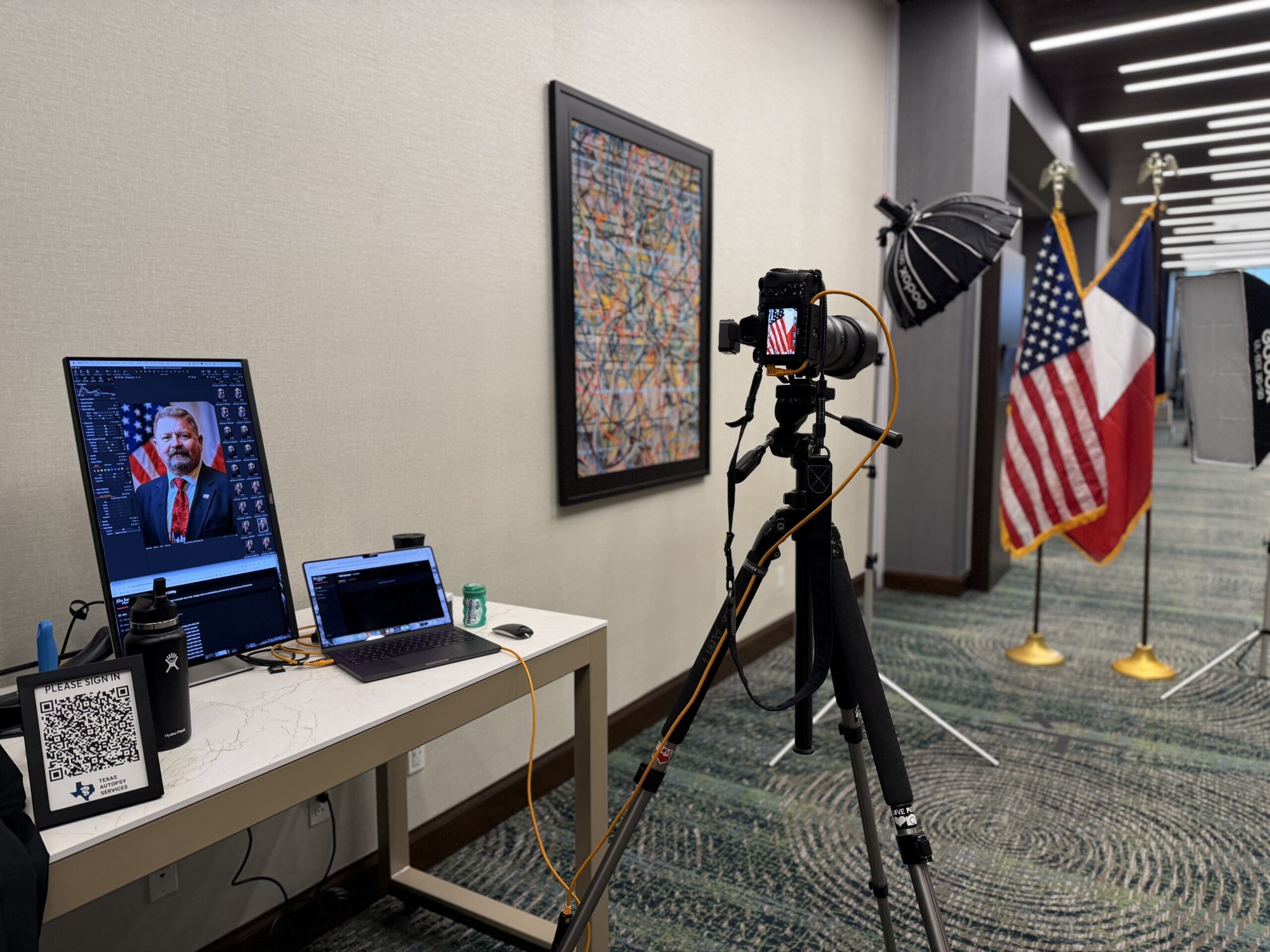
A professional headshot station turns the activation around. Instead of giving something away and hoping for a name, you offer something the attendee genuinely wants — a polished, LinkedIn-ready professional headshot delivered by email within minutes — and the price of admission is a quick branded signup form.
The signup form is the hidden lever. Every attendee who wants a headshot gives you their full name, work email, phone, job title, company, and any custom segmentation field you specify (industry, role seniority, buying authority). They give it willingly because they want the headshot. The result is a fully verified lead list with conversion-quality data attached to every row.
At a recent event I ran, 68 attendees came through the station in 6 hours. 91% of them opened the gallery email within 24 hours. That’s an open rate that would make any email marketer faint — and it’s because the email is the photo they actually wanted, not a marketing pitch.
The post-event tail is also longer than any other activation. Every time the attendee uses that headshot — on LinkedIn, on their company website, in a conference badge for a future event — they’re using a photo branded by you (the email it came from carried your branding). It’s the only activation that becomes a permanent visual asset for the attendee.
The Side-by-Side
| Activation | Typical cost | Verified leads | Cost per lead | Brand longevity |
|---|---|---|---|---|
| Branded swag | $3K–15K | <10 | $1,500+ | Days, if any |
| Hospitality lounge | $10K–40K | 30–60 | $400–700 | The event itself |
| Photo wall | $2K–8K | <25 | $200–800 | Social-media tail |
| Headshot station | $5K–12K | 60–250 | $32–200 | Years (LinkedIn) |
The headshot station wins on every column except setup simplicity. Swag and photo walls are easier to deploy. But neither one will produce a lead list you can hand your sales team on Monday morning.
What I’d Actually Recommend
If your sponsorship budget is under $5,000 — get out. You’re not going to drive meaningful pipeline at that price point with any activation. Spend the money on better outbound or wait for a bigger event.
If your budget is $5,000–$10,000 — go all-in on a headshot station. It’s the highest-leverage activation at this price point because every attendee who participates becomes a verified lead with engagement data attached.
If your budget is $10,000–$25,000 — combine a headshot station with a small hospitality element (coffee, light snacks) to extend dwell time at the booth. The lounge alone underperforms; the lounge plus a headshot station compounds.
If your budget is $25,000+ — you’re at a sponsorship tier where you can afford a full experiential setup. Even then, the headshot station is the only piece of that setup that produces individually verified, conversion-ready leads. Build the rest of the experience around it, not the other way around.
What to Ask Before You Commit to Any Activation
Three questions, every time, regardless of which option you’re evaluating:
- What does the lead list look like 24 hours after the event ends? If the answer is “we’ll know by next Friday” or “we have to scrub it first,” the activation isn’t producing real leads.
- What percentage of attendees gave us their full contact info, voluntarily? If the activation requires a giveaway raffle to capture emails, those emails are low-intent. Real leads come from attendees who wanted to engage with you.
- Will the brand impression last past the event? If the answer is “social media impressions” or “swag sitting in their bag,” the impression won’t survive the trip home.
The headshot station is the only activation I work with that gives a sponsor a confident “yes” on all three.
Want to Run the Math for Your Next Event?
Check my date and we’ll walk through your sponsorship budget, your target audience, and what a branded headshot station would actually deliver at your event. No deck, no pitch — just numbers from real events I’ve run, and a recommendation that’s honest even if it isn’t a station.

Be The First To Comment